Hogan Development Survey (HDS)
Assesses “dark-side” personality traits—behaviours that emerge under stress or pressure that can disrupt relationships, hinder performance, and derail careers.

Assesses “dark-side” personality traits—behaviours that emerge under stress or pressure that can disrupt relationships, hinder performance, and derail careers.
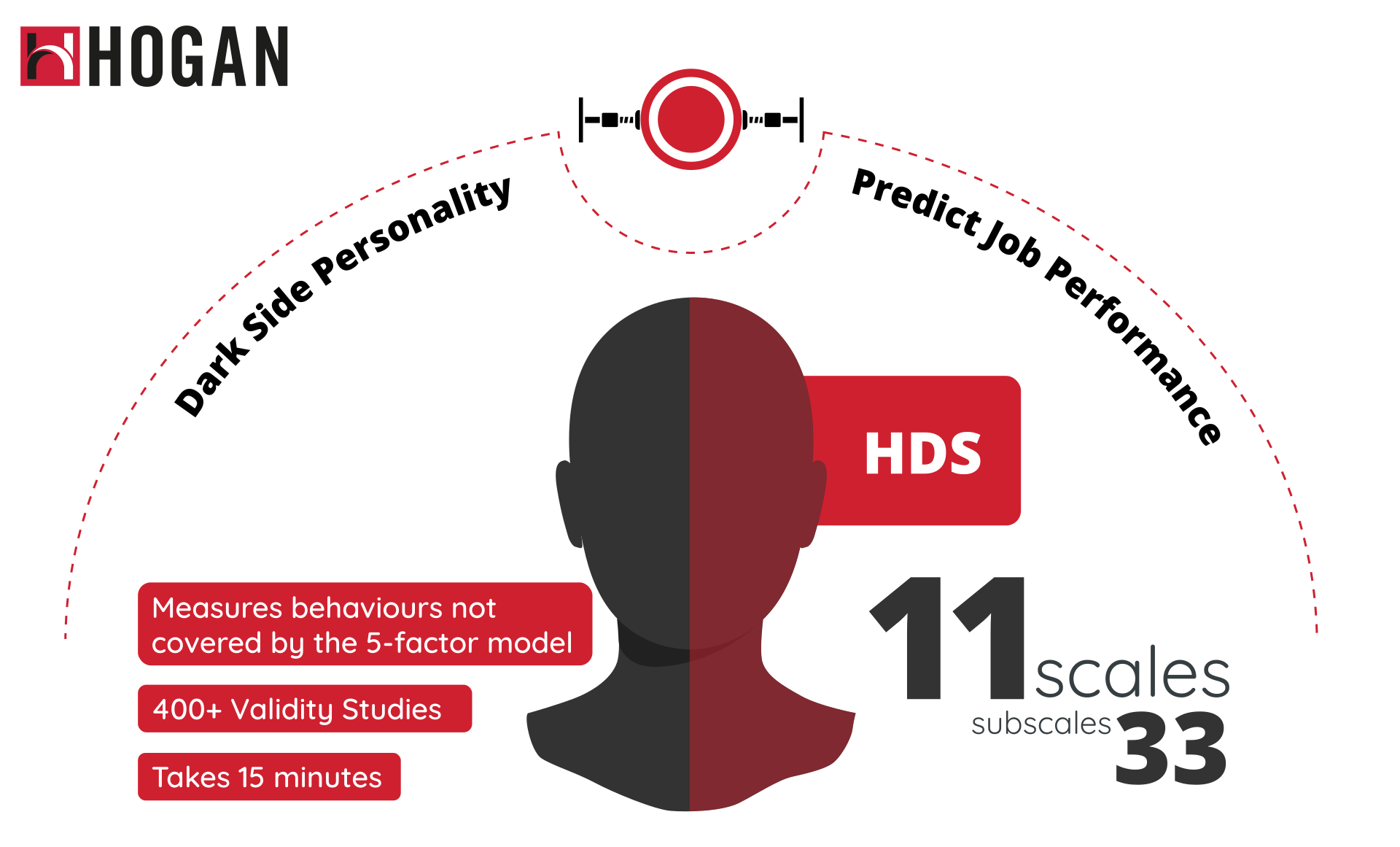
The Hogan Development Survey (HDS) maps the 'dark-side' of personality. It was created to complement bright-side personality measures by identifying the interpersonal and behavioural tendencies that emerge when people are stressed, fatigued, or complacent. It uses 11 main scales and 33 subscales to describe how strengths become liabilities in pressure situations.
With senior roles often shaped by reputation and workplace relationships, understanding how leaders behave under pressure is essential for effective selection and development. Without clear insight into stress‑driven tendencies, organisations risk appointing people whose strengths can become liabilities in high‑stakes situations.
This can produce damaged relationships, stalled projects, and reputational risk that ripple through engagement, career progression, succession planning, and organisational culture. Unrecognised derailers may also undermine inclusion efforts and distort performance outcomes, making it harder to build resilient leadership pipelines.
The Hogan Development Survey (HDS) offers a focused lens on the behaviours that emerge when people are stressed, bored, or complacent—patterns often described as the “dark side” of personality. By identifying derailers such as overconfidence, scepticism, withdrawal, or perfectionism, the HDS helps organisations anticipate where promising leaders might struggle and why.
Organisations using the HDS typically gain:
Earlier risk detection for leadership derailment and counterproductive behaviours.
Richer development conversations that move beyond strengths to include strategies for managing pressure.
Better succession and role‑fit decisions by matching roles to people whose stress responses are compatible with job demands.
When combined with bright‑side measures like the HPI, the HDS creates a balanced profile that supports more accurate talent decisions, targeted coaching, and stronger cultural alignment.

Reliability: Its methodical measurement of dark‐side, personality traits ensures that the insights are consistent and relevant to workplace behaviours under pressure.

Relevance: By focusing on how individuals interact under pressure conditions and capturing the behavioural tendencies critical to both social cohesion and ambition, the HDS delivers immediately actionable insights in diverse organisational settings.
Scientific Rigor: With its grounding in established personality theories and support from extensive research, the HDS provides dependable and evidence-based outcomes.
The Hogan Development Survey (HDS) helps organisations proactively address leadership risk and maintain effective performance, especially under pressure. Incorporating the HDS into talent strategies ensures a deeper understanding of how individuals might respond to stress, challenge, or change.

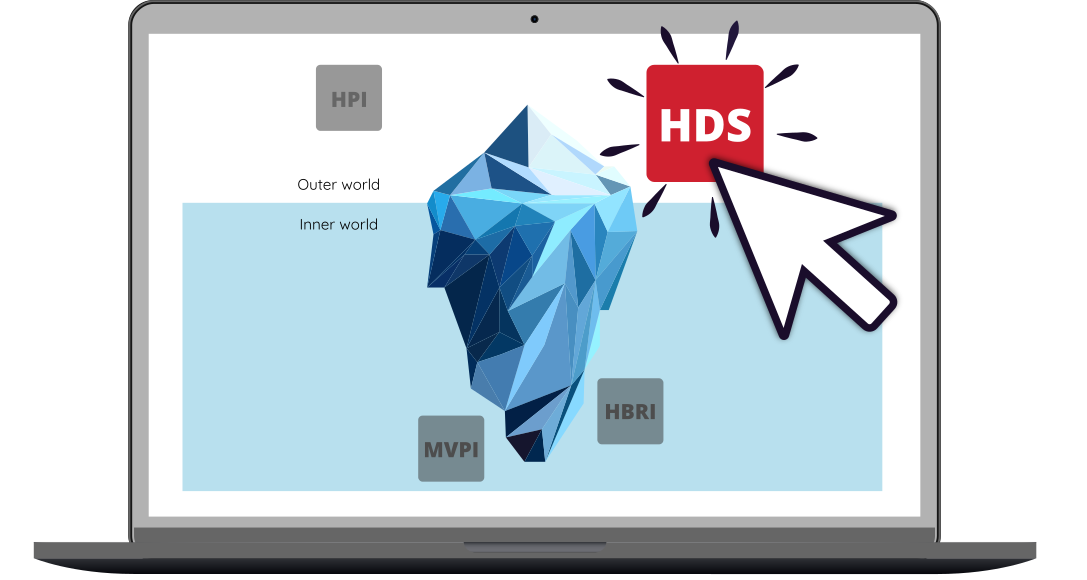
Explore more insights into the nuanced ways personality may influence performance. We invite you to reflect on how the HDS fits in the wider talent acquisition and development process.